

Our History
Our History
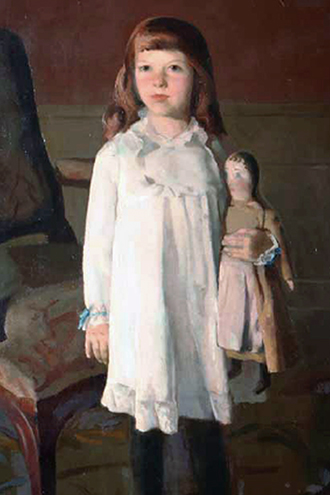
Bradley Hospital was the nation's first psychiatric hospital for children. The hospital was named for George and Helen Bradley's only child, Emma Pendleton Bradley, who was born in 1879.
Emma was stricken with encephalitis at the age of seven. The disease left her with multiple disabilities, including epilepsy, cognitive impairment, and cerebral palsy. This tragedy inspired the Bradleys to conduct a worldwide search for a cure or treatment for Emma's condition. At the time, psychiatry and neurology were in their infancy and hospitals were solely for adults. Pediatric services were not yet available. The family had the means to arrange around-the-clock care for Emma at home.
From Misfortune Hope Arises
Ultimately, the Bradleys had to accept their daughter's fate but wanted to ensure that other families would not share their family's struggle. In his will, George wrote, “Out of this misfortune of our only child has grown the purpose and the hope that from the affliction of this one life may come comfort and blessing to many suffering in like manner.” Upon the passing of George, then Emma, and lastly, Helen, their entire estate was utilized to create a place where families could find the care and treatment for their children that was not available to the Bradleys. Ground was broken in 1929 on the 35-acre site in Riverside, Rhode Island and two years later the institution opened its doors.
The Emma Pendleton Bradley Home was officially dedicated on April 8,1931 during a ceremony in the hospital's Pine Room. In accordance with the terms of George Bradley's will, the facility gave first preference to poor, needy children from Rhode Island. Families were only billed if they had the means to pay. And so, 25 years after George Bradley's death, the Bradleys' dream was realized. It is clear today that the dream was only the beginning.
Milestones
From its early days, Bradley Hospital was affiliated with Brown University with early leaders recognizing the need for research to improve the care of the children who had no other treatment or hope for improvement.
The 40s: Research Leads to Treatment
In 1942, Charles Bradley, MD, the Home’s medical director and great nephew of George, made a significant discovery. Utilizing a relatively new drug, amphetamine sulfate, to treat children with convulsive and schizoid disorders, he and his research assistant discovered that patients, in what became the first of many studies, became more able to control their actions and/or more alert and interested, achieving more in their school lessons. Later dubbed the “arithmetic pill,” Dr. Bradley’s work paved the way for the medications used to treat attention deficit hyperactivity disorder today.
Around the same time, psychologist Herbert Jasper, PhD, established a training arrangement with Brown University and began extensive study in electroencephalography, or “EEG.” He became the first scientist in the western hemisphere to use the EEG to diagnose neurological problems in children – a standard diagnosis procedure for children still today.
The 50s Onward: Accreditation and Growth
The Home was incorporated as the Emma Pendleton Bradley Hospital in 1957 and was accredited by the Joint Commission in 1958.
In 1985, Bradley Hospital was selected as one of six training centers in the country to be a site for a 10-year pilot program allowing physicians, after graduation from medical school, to take board specialties in pediatrics, general psychiatry and child psychiatry after a five-year comprehensive program. Today, the 'Triple Board' program at Bradley and Brown University continues to be one of the nation’s most coveted spots for top-tier medical students, who prize it for the unmatched opportunity to train across every diagnosis and type of service."
The Hospital began diversifying its levels of care in the early 1990s, reflecting the belief that children and adolescents should be treated in the least restrictive setting that is safe for their care. The first residential program in the community opened in 1993, with the first of what is now six Bradley Schools opening in 1994. Soon to follow were an ever-broadening array of partial hospital, home-based, and later remote programs – all of which can be identified through this website.
The 21st Century Onward: World Class Care
Bradley Hospital joined the Lifespan Health System in 1996, helping to ensure a future of providing care and treatment for children and families who need what only Bradley can offer. In 2024, Lifespan rebranded itself to Brown University Health to better reflect its expanded affiliation with Brown University and to attract and retain the nation’s best clinicians, medical faculty, students, and residents who in turn can provide world-class medical care while creating a 21st century biomedical research structure.